Category: Uncategorized

  • Planning for your Step Family

    Planning for your Step Family

    What is a Step-Family?

    A step family can include
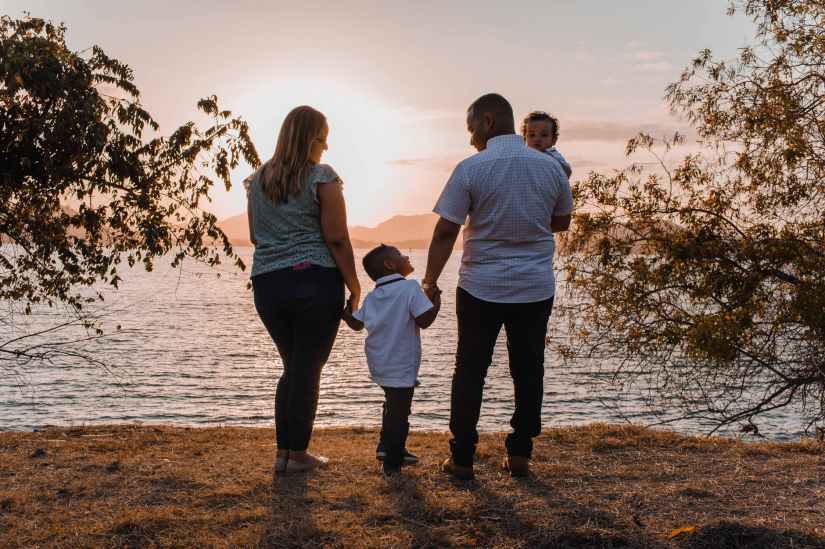
    Photo by Luis Quintero on Pexels.com
    • A couple where at least one person, and maybe both, have children from a prior relationship
    • Same-sex couples where at least one partner has biological or non-biological children from a prior relationship
    • A family with adult children who are in second or subsequent relationships with children a from previous relationships
    • A family with adult children whose spouses have children from a previous relationship

    How common are Step-Families? 

    According to StepFamilies.org, at least 1,300 new stepfamilies are formed every day and more than 50% of American families are remarried or re-coupled. 

    Over half of children under the age of 13 in America are living with one biological parent and that parent’s current partner.  

    Why is Estate Planning Especially Important for Step-Families?

    Most families don’t understand how their property will be passed down if they die without a comprehensive estate plan. 

    Hypothetical:

    Lana is a widow with two children, Ava (age 6) and Ray (age 9). She married Richard. Richard is divorced with one child, Paul (age 8). The couple buy a home ($1M) and hold it as community property. Lana has several retirement accounts and bank accounts ($2.5M) and she has named Richard as the beneficiary with Ava and Ray as contingent beneficiaries. She also has an IRA ($30K) from before she met Richard but has not named a beneficiary on that account. Richard owns real estate, purchased before he met Lana ($500K). Lana died without a Will. A couple years later, Richard died. 

    Here’s how the money was ultimately distributed: 

    • Paul, over $3.5M
    • Ava,  $10K
    • Ray, $10K

    This outrageous result is the consequence of a failure to make a comprehensive plan. On Lana’s death, title documents and beneficiary designations made Richard 100% owner of the family home, bank accounts, and Lana’s 401K. Richard, of course, kept title to his own real estate. Richard, Ava and Ray divided the IRA according to their state’s intestacy laws, ⅓ to Richard and Ava and Ray shared the remaining ⅔. When Richard died without a Will, his son inherited his entire estate. Ava and Ray had no legal position to inherit Richard’s estate. 

    This hypothetical is very simplified. In real life, there are always complications and inconsistencies. There are also a variety of issues not addressed here, such as who will care for Ava and Ray.

    How Does An Estate Plan Help?

    Most couples with children from a prior relationship want to protect and provide for their spouse and also make sure that their children are protected. 

    An estate planning attorney helps by going through your assets with you and designing a plan that sets out to whom, when, how and why your property should pass. 

    Trusts like an A/B trust, QTIP trust, Intentionally Defective Marital Deduction Trust, or a QDOT for non-citizens, can hold assets for your spouse during their lifetime while protecting your children’s inheritance. These trusts can hold on to the property for your children until your spouse dies or your attorney can include language that allows the trust to pay for your children’s education, healthcare and support during a time period that you decide. One drawback to consider about to these kinds of trusts, is that your spouse and children can (and often do) argue about how much money the other should be allowed to take out of the trust. 

    Life Insurance can also be an option to provide for your spouse or adult children. It can be especially useful if you don’t have enough assets to protect the people who depend on you or if you want to minimize the chance of an argument between your spouse and children.

    Also consider whether your spouse actually needs an inheritance. In our hypothetical, Richard had a home of his own and may not have needed the family home as a place to live.

    Estate planners need to listen carefully to their clients’ goals and must consider an entire estate profile in order to craft a solution that achieves these goals. 
  • Should I create my estate plan online?

    Photo by Gustavo Fring on Pexels.com

    Many people are turning to online estate planning platforms during the Covid-19 pandemic. This could be a good option for some people.

    Some people with very simple estates can use DIY forms and systems effectively. If you go with an online DIY service, consider one that provides attorneys to help, it might be worth it to pay a little extra for that service.

    Common problems with with DIY plans

    While some DIY plans can work well, the problems with those plans fall into two categories: problems with the services and problems created by the user.

    DIY Service Issues

    Two common issues with DIY services are that the the forms themselves have errors and they are actually ineffective. This could be caused by poorly drafting or by using documents that are actually designed for another state. Keep in mind, that estate planning documents are state specific.

    Websites can over simplify or inaccurately describe the purpose and use of the forms they offer. This means that you could complete the form differently than you would have if you had really understood the effect of the documents.

    Issues caused by users

    Some problems caused by users arise because the user wants to change the form or decides to write in special language to reach a certain goal that wasn’t intended by the form. These improper changes make the documents ineffective and confusing and can even void the documents. Here are some other common issues:

    • lack of understanding or misunderstanding of income, property or estate tax consequences
    • misunderstanding of common estate planning terminology
    • improper execution of documents
    • failing to update the plan to reflect changes in the law or tax code
    • failing to create a comprehensive plan, such as not understanding how life insurance and beneficiary designations impact an estate
    • failing to implement the estate plan, effectively eliminating the entire purpose of the plan, such as failing to fund a trust

    How can you tell if you have a simple estate?

    Estate planning is a complicated field and there are many nuances. DIY services can give you general information but for advice about your specific situation, you’ll need a professional. Some situations almost always warrant more care and handling by an licensed attorney. If you have any of the following situations, you should strongly considering hiring an attorney:

    • you own real estate
    • you have minor children
    • you or your partner are in a second or subsequent relationship with children on either or both sides
    • you have an adult child who is in a second or subsequent relationship with or without children
    • your adult child is in a relationship with someone who has a child from a former relationship
    • a child of yours or your partner passed away leaving children
    • a family member has a physical or mental disability
    • a family member has or has had drug, criminal or addiction issues
    • a family member receives public benefits
    • you or your partner have received or expect to receive an inheritance
    • you own a business

    There are, of course, many other issues that require more care. If you’re not sure whether you have a complex issue that needs more than an online plan can offer, a local estate planning attorney is the place to start.

    Are These DIY Plans Bad for Estate Planning Attorneys?

    There will always be those who think that they can do a better job than a professional. You might be thinking, of course she wants me to use an attorney, she is one! Guess what – you’re right but not for the reason you think.

    At the beginning of this post, I described just some of the reasons why DIY plans can be a mess. Usually, by the time anyone notices a problem, the person who created the plan is in a coma, incoherent or dead. By that time the plan cannot be repaired. The only solution is to pay an attorney like me to fix it. This is always much more costly than hiring an attorney to create a proper plan in the first place.

    So, here’s why I don’t want you to DIY your estate plan without talking to an attorney first: I do this type of work because I like helping families. No family deserves the stress, hassle and huge expense of dealing with a broken estate plan while, at the same time, trying to arrange for a memory care home, final wishes or even a funeral. Even worse, if parents die and leave young children, the children will be forced to use their inheritance, including the family home, to pay for attorneys and court costs.

    Working with an attorney is expensive, I know that, but it can save you time and money in the long run. You wouldn’t reset a broken bone yourself. Similarly, you shouldn’t try to make you own estate plan without talking to a professional.

    If you think you have a very simple estate, many states offer free and low cost forms available to the general public. If you’d like to find out if these forms are a good fit for you, contact me and we can go over the benefits and limitations of these low cost and no cost options.

  • Essential Messengers

    Photo by Abstrakt Xxcellence Studios on Pexels.com

    I came across this article by Stephen Meyers about his work as a U.S.P.S mail carrier and I was transported back to the summers I passed on my grandmother’s porch when she would tell my sister and I stories about her varied life and her many jobs. Like Meyers, one of those jobs was as a U.S.P.S carrier.

    By the time my grandmother started working for the U.S.P.S., in about the 1940s, she had already had many jobs. As a child in southern California, she worked in her aunts’ tailor shop sewing hems and buttons but was also responsible for housekeeping and and making the daily tortillas. During prohibition, she and her mother ran a speakeasy. Later, she worked on the docks packing frozen tuna into cans until her fingers, too, were frozen. At least once, she slaughtered, plucked, and gutted a goose in her job as a house maid. Years later, when she told my sister and I of these jobs, she laughed and her eyes sparkled, the sting of poor working conditions and low wages dulled by the passage of time.

    But time did nothing to dull her memories of working for the U.S.P.S. When she told of her job delivering mail, she did not laugh. She described it as the toughest of any of her jobs. She began working with brand new shoes, a rare luxury in her case, but after after several weeks walking through neighborhood after neighborhood, she not only had blisters but had worn holes into the bottoms of her new shoes. She lined them with cardboard. When it rained, the cardboard did nothing to keep out the water. The summer heat was worse. She remembered the constant thirst. At that time, carriers could not carry drinking water because the heavy bags required both hands, and even if you could physically manage it, water could spill and ruin the mail.

    Despite all that is going on right now, my U.S.P.S. mail carrier continues to arrive every day delivering consistency, routine and normalcy. I am grateful for all of the people working essential jobs, often unseen and unsung. Thank you. If you are providing an essential service during this shelter-in-place emergency and you are concerned about protecting yourself and your family, I can help. I have discounted my estate plans for essential service providers during this emergency. If you have a very simple estate, ask about your free and low cost options. 

  • Cleveland Sage

    This weekend marks the end of the 2nd full week following the shelter in place order that was issued by our county. After that order, other counties and finally the State of California followed suit. So, we have been home. 

    Staying home means tending to tasks that I’d been putting off. In particular, gardening. 

    Gardening for me is an olfactory experience, it smells like a medicine cabinet. That is to say, it smells like Cleveland Sage. Because Cleveland Sage it is a native plant, it belongs here. You don’t need to do anything to help it grow other than leave it alone. But this past weekend, I decided to trim this sage a bit because I wanted to plant something nearby and the sage had grown big and bushy and was blocking the light. As I was trimming, I came across a branch buried in the soil and I was reminded of how this plant cares for its children. 

    An older sage will eventually lay its branches against the soil. Under the parent’s protective canopy, those branches will sprout their own roots. This is how a child plant begins. It will push its roots down into the earth, while at the same time, receiving nourishment, protection and support from the parent plant. If it lays long enough, and the roots become strong enough, the branch will eventually be able to survive on its own, even if it is severed from the parent. 

    Isn’t this what we do for our children, too? 

    Don’t we also aim to raise our children so that they can survive, and even flourish, when we are gone? 

    If we cannot be there while they still need our protection and support, shouldn’t we do whatever we can to protect and provide for them? 

    Make sure your estate plan includes who will care for your children if you can’t be there. It should include provisions for your children’s financial and physical care and protection. If you created a plan before your children were born, it is time to update it.

  • I’m not wealthy so I don’t need an estate plan, right?

    Actually, an estate plan is about so much more than money. It says who should care for your children and pets if you are hospitalized or die. It tells your family and doctors what kind of medical care you want if you can’t speak for yourself. It can protect you from financial disaster if you are unable to manage your bills and pay your mortgage.

    It can be daunting to take the first steps to setting up your estate plan but I promise to guide you step by step through the process to make it clear, fast and easy. You take care of your family everyday, make sure they are protected when you can’t be there.

    If you still don’t have an estate plan or haven’t looked at yours in a while, we can help. Contact us here or at 650-636-7247.

  • Caring for Your Pet After You Die


    Being loved by an animal feels special and magical. It also creates an obligation for pet owners who are responsible for the food, shelter, comfort and regular medical care of their furry charges. It is no wonder then that so many owners want to make sure their pets are cared for if they pass away before their pets. 

    Contrary to many news stories, pets cannot actually inherit property. Pets are property. Here are the most common options for caring for your pet after you die:

    Ask a Friend

    This easiest, most informal option is to simply ask a friend if they would be willing to care for your pet if something happens to your. This is the most risky option because it relies on your friend’s willingness and ability to step in. Other people responsible for your care or your estate might not know about or approve of this agreement.

    Use a Will

    You can pass your pet to your friend in you will and even give your friend money or property in order to finance the care of your pet. Remember that a Will only takes effect after you die. For example, if you are injured or unable to communicate, your Will would not take effect. So you will still want to make arrangements in case you are incapacitated.

    If you give your pet in a Will, your friend becomes the pet’s legal owner after your die. They decide what happens to your pet and if their circumstances change or if they die, your pet could end up in a shelter despite even the best intentions. If you leave money to your friend based on a promise, the friend might use the money for themselves or the money could be seized by your friend’s creditors.

    Pet Trust

    California is one of many states that allows trusts to be established for the care of pets and domesticated animals. When you establish a pet trust, you give property and assets to the trust to be used for your pet’s care. You can name a trustee and backup trustees, who each have a legal obligation to use the trust property for your pet. The trust can also describe the type of care you want your pet to enjoy. 

    No Plan

    If you have no plan, the ownership of your pet will depend on the person handling your estate. Pets are often surrendered to shelters when their owner passes away without making any provision for their care. At minimum, it is our responsibility to plan for our pet’s well-being when we pass away.

    You can contact me here to discuss your planning options for caring for your pet.

    Remember, this information is provided for general education and entertainment purposes. I have not considered your individual circumstances. You should consult with your own attorney regarding your unique circumstances.

    Photo by Bekka Mongeau on Pexels.com
  • Tunnel Vision

    One of my favorite podcasts, Hidden Brain: Tunnel Vision, described the phenomenon of tunnel vision and offered ideas on how we can defend against it. The host, Shankar Vendantam, explained that when we experience scarcity of time, money, sleep or other resources, we can become hyper-focused on bridging that gap, causing us to strive for a narrow, short-term, and often insignificant, goal. As we hear in the podcast, simple mistakes, when made in the context of a stressful situation, can gather speed and set off a cascade of disastrous events.

    Plan Before the Storm. When a loved one experiences an emergency, becomes incapacitated or dies, many decisions must be made immediately. This can lead to the tunnel vision trap. Caregivers and family members may feel emotionally, mentally and physically overwhelmed. All too often this pressure leads to arguments and resentment among siblings and other family members. An estate plan can help relieve that tension. It is why so many adult children describe their parent’s estate plan as a welcome gift. When people make incapacity and end- of-life decisions in advance, it frees their loved ones to do what matters most like spending time with an ill parent or grieving with siblings.

    How to Get Started. Most of us know that we should have an estate plan but it is so easy to put it off. Many people choose to start or review their estate plan during a preset time of year, like following your employer’s benefits open enrollment period, right after filing taxes, or your birthday.

    If you don’t have an estate plan or if it has been a few years, I welcome the opportunity to speak to you about how I may be able to help your and your family reach peace of mind. You can contact me here.

    Remember, this information is provided for general education and entertainment purposes. I have not considered your individual circumstances. You should consult with your own attorney regarding your unique circumstances.

    Photo of tunnel with woman in red dress credit: Miriam Espacio on Pexels.com

  • Help! I was left out of my husband’s will!

    Q: I was recently married and my husband died suddenly. There is a Will but I am not in it because it was written before we were married. What is going to happen to his assets? – Ima Survivor

    A: Dear Ima,

    I’m sorry to hear about your loss. Know that you are not alone. Even though we know how important it is to keep our estate plan up to date – it does not always happen that way. 

    The state of California has a strong interest in making sure that a surviving spouse or registered domestic partner (RDP) is not accidentally left out of an estate plan that was created before the marriage. The general rule is that as an “omitted spouse” you inherit the share you would have received if your spouse did not have a Will, this means that you will get at least a portion of your spouse’s estate. (Usually California’s rules apply to spouses and RDP’s but I will just use “spouse” going forward for brevity)

    This means you inherit assets held in both your names as community property and joint tenants along with all or some of your spouse’s separate property. Your share of separate property can be reduced if your spouse had children.

    You should know that 1) it’s time to hire a lawyer if you don’t already have one; 2) there are exceptions to the rule above; and 3) find a support system and take a deep breath, this is going to take some time and money. Most people experience stress magnified by uncertainty and the grieving process so getting a support system for yourself is important. If you are having trouble paying bills because of this situation, tell your lawyer because the court may be to give you enough money from the estate to pay bills.

    Some exceptions: a person is not an omitted spouse if the omission was purposeful, not an accident. In situations where a person decides not to provide for their spouse in a will or trust, a carefully drafted document can effectively disinherit as spouse. This is actually not too rare, especially when there are children from a prior marriage, a non-citizen spouse or if the surviving spouse has sufficient assets of their own.

    A person can also waive the right to inherit as an omitted spouse under a prenuptial or post-nuptial agreement.

    Finally, another reason why a surviving spouse might not receive any or all of an estate is when that person has committed physical or emotional abuse, neglect, or financial abuse.

    Good luck, Ima. I hope this helps. 

    Remember, this information is provided for general education and entertainment purposes. I have not considered your individual circumstances. You should consult with your own attorney regarding your unique circumstances.

  • My disabled child receives SSI and Medi-Cal. How does that affect my estate plan?

    If a loved one is disabled and receives needs-tested public benefits, you should know that an inheritance, gifts or other assets can cause a disabled person to lose their Supplemental Security Income (SSI) and Medi-Cal benefits, partially or entirely.

    Disabled Californians with financial need may qualify for SSI or Medi-Cal benefits to help pay for medical care, shelter and food. These services, which provide only subsistence level support, are usually available only to those disabled people with very few assets. (Not all assets are included in the calculation, contact me or your estate planning attorney for a current list of the types of assets are that are included and excluded in deciding eligibility.)

    While SSI and Medi-Cal benefits do not usually provide enough for a person to enjoy a desired standard of living, the benefits do help. Californians who want provide for their children without causing them to lose public benefits can do so with a Special Needs Trust (SNT).

    Instead of giving an inheritance directly to a disabled person, assets held in a SNT are managed to supplement benefits. The terms of the SNT prevent the trust funds from being “owned” by the disabled person. The trust funds are instead used to fill the gaps that public benefits do not cover. With appropriate, early planning, parents and loved ones of a disabled person can:

    • Preserve needs-based public benefits;
    • Provide financial support to supplement public benefits;
    • Select an appropriate trustee or other individual or entity to manage the inheritance;
    • Set guidelines for spending and managing assets;
    • Provide guidelines for living and personal care arrangements;
    • Set advocacy guidelines for the disabled person;
    • Improve employment and social opportunities;
    • Facilitate a comprehensive family plan;
    • Preserve assets for other heirs following the death of the individual with special needs.

    The disabled person receiving needs-based public benefits who owns assets in excess of the SSI and/or Medi-Cal limits risks:

    • Losing eligibility for needs-based public benefits;
    • Being required to reimburse benefit agencies for services provided during the period when their financial circumstances made them no longer eligible;
    • Losing the benefit of a parent-direct lifetime care and advocacy plan;
    • Becoming subject to undue influence, waste or use assets in a way that the parent wants to prevent;
    • Facing institutionalization or inappropriate placement;
    • Finding family relations becoming overwhelmed or strained.

    SNTs are highly technical and complex. They are governed by the probate code and state and federal laws. Rules and laws change in unpredictable ways, so if you already have a special needs trust as part of your estate plan, it might be a good idea to have an attorney review it. It’s always a good idea to have your estate plan reviewed following a law change or after about 5 years.

    There is no one size fits all SNT. The needs and circumstances of each individual and family must be considered in the drafting and not all disabled people need the protection of a SNT. To learn more about special needs trusts contact me.

  • What is a trust?

    Trusts are unique to the US and a handful of other countries. Simply, they are contracts between you and the state, in this case, California, that control how to deal with property.

    As the person creating the trust, you are the “settlor” (sometimes also called the “trustor”). As settlor, you are responsible for putting assets into the trust with the advice of your estate planning attorney. Importantly, your attorney will also tell you which assets do not go into the trust. There can be more than one settlor of a trust, such as when spouses or Registered Domestic Partners create a trust.

    Depending on the type of trust you create, you may also be the trustee (or co-trustee, if there is more than one trustee). The trustee is responsible for making sure that the terms of the trust are carried out. You can also name a trusted person or professional fiduciary as trustee.

    Whoever you choose, the trustee must follow the instructions in the trust document. Many people use trusts to avoid probate and to simplify the transfer of property after they pass away. In that case, a trustee is responsible for making sure the transfers are done correctly.

    The State of California’s role is to make sure that the terms of your trust are enforced and respected. It also sets the rules for interpreting and, in unusual cases, modifying your trust. Rules for California trusts are typically found in the Probate Code though they may also be found elsewhere in the state’s codified laws.

    You can set up an appointment to talk about whether a trust is right for you, by contacting us here.