Tag: trusts

  • DIY Estate Planning (Refresh)

    DIY Estate Planning (Refresh)

    It’s March 2026 and we are revisiting some oldie but goodie posts. Here’s one with some refreshments. Enjoy!

    Do you really need to pay a lawyer to create an estate plan?
    Pros of doing it yourself are that it can be fast and it is cheap.
    Cons are that you’ll probably mess it up.

    Occasionally people ask about creating a Will or Trust without an attorney. The answer is, it depends.

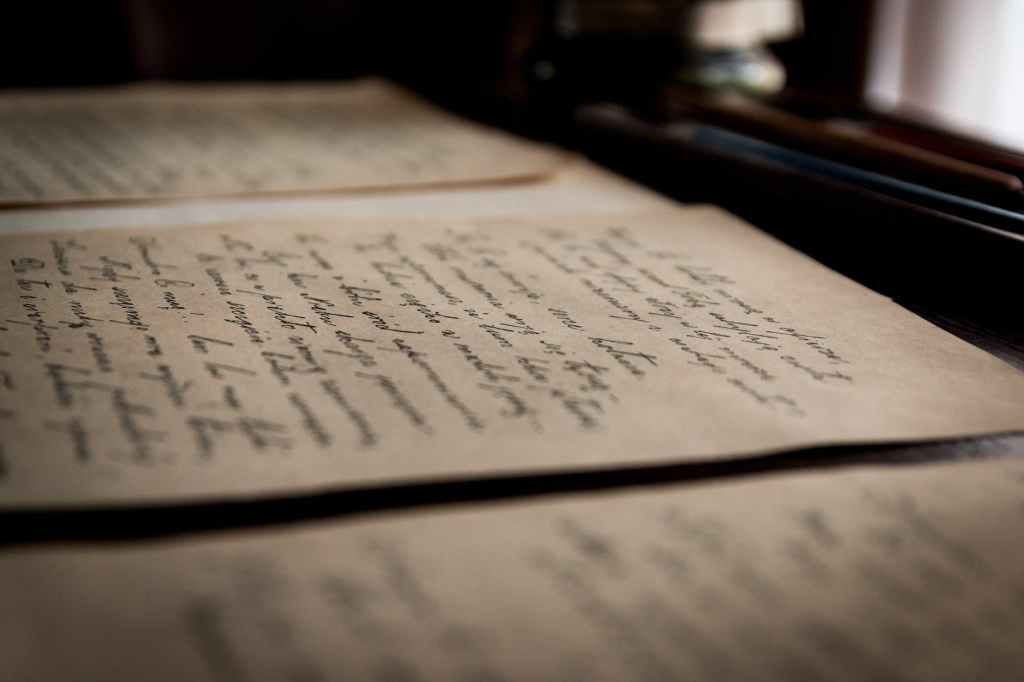
    A person can handwrite a will without an attorney and I’m sure there are even YouTube videos on how to do it. In fact, in Canada, following a horrible accident, a farmer scratched his Last Will into a tractor fender and it was enough to pass on his estate.

    However, just like cutting your own hair, just because you can does not mean you should. Sure, it works out great for some but is embarrassing for most of us.

    In estate planning, there are a lot of moving parts. First, there is more to an estate plan than a Will. For example, there are powers of attorney, guardianship, and custodianship considerations, among other things. Each of these comes with decisions and strategies to consider.

    Not only that, even the law governing simple Wills is not that simple. Case in point, England’s gift to American probate law, the Rule Against Perpetuities. Put simply, this prohibits a trust from lasting forever and ever, well, into perpetuity. It dates back to the 1680s and confounds even experienced lawyers so often that the California Supreme Court ruled in Lucas v. Hamm, 56 Cal.2d 583 that it is not malpractice if a California attorney misinterprets it!  

    Let that sink in . . . Professionals with years of education and years of work experience struggle to comprehend the nuances of a law. But not you . . . you’ll whip it up with a quick ChatGPT query. Not likely.

    You may think that since I am an estate planning lawyer, it’s in my best interest to tell you to get a lawyer to draft your estate plan. And that would be true. But, I have also represented trustees tasked with administering DIY Trusts and I can say that DIY Trusts are very good for business. This is because regular folks, and even sometimes lawyers who dabble in estate planning, make lots of mistakes. Don’t notice the gaps they leave and the inconsistencies and ambiguities they create. Resolving these when the DIY-er is no longer around can be a profitable undertaking.

    Botched, incomplete or invalid wills usually turn up in the lawyer’s office after it’s too late and the drafter has died. The children and heirs end up paying much more than the cost of preparing a plan. In addition to attorney’s fees, they pay with their time, emotional and mental frustration, and, sometimes, ruined family relationships.

    A task force assembled by the American Bar Association issued a statement on whether people should attempt doing their own estate plan. Their answer is that it might be okay in some circumstances but that it’s probably not a good idea. You can read the ABA article here.

    To find out how I can help your with your estate plan, contact me here or call me at 650.636.7247.

  • Fiduciary Frontiers: Why Divorce Lawyer Should Care about Estate Planning

    Estate planning is frequently viewed as a static event—a document signed and filed away.

    However, when a separation or divorce begins, a dynamic, high-stakes process is set in motion. This paper serves to bridge the gap between family law and estate planning, to ensure that a client’s legal and financial architecture does not collapse during their most vulnerable transition.

    Dispelling the “Final Decree” Myth

    There is a dangerous, widespread assumption among both clients and many attorneys that that the filing of a divorce petition automatically severs inheritance rights.  This is a fallacy.

    In reality, in many jurisdictions, until a final judgment is entered, the “soon-to-be-ex” remains the legal next-of-kin, the default trustee, and in some cases, the primary beneficiary.

    Many professionals mistakenly believe that estate planning needs to wait until the Final Decree.  This is also not true.

    In the era of silver divorce, where many people are divorcing at age 50 and over, the risks of mental or physical illness and even death are rising.  Without immediate estate planning intervention, when a client become incapacited or dies mid-divorce a legal landscape of competing laws and practices looms ahead.

    The Convergence of Practice Areas: A Multi-Dimensional Opportunity

    Navigating a mid-divorce death requires more than “solid” lawyering.  It requires that the advisor have a solid grip on convergence of family law, trusts and probate laws and even ERISA rules.  Each of these areas alone is dynamic and complex. 

    By integrating estate planning with the divorce process, we can more swiftly arrange for management of accounts and property, give clients emotional security during a time of chaos, leverage professional synergy and even delegate a successor to see the divorce process to finality.

    Estate Planning as part of the Matrimonial Workflow

    The “Early-and-Often” applies here.

    The family law attorney should not view estate planning as a post-divorce “closing item”.  Instead, it must be woven through the entire process. Waiting for the Final Decree to address is a risky game and gambles with the client’s financial and personal legacy.

    If possible bring a trusts and estates attorney onto the team before filing.  If not, discuss the importance of revising the estate plan with your client early and often.

    When your client meets with an attorney for an estate plan that bridges the married and single status, they not only can avoid problems but also may raise points that can be negotiated as part of the Settlement Agreement.  For example agreement on a guardian for minor children in the event both parents pass can be a major win a divorcing couple.

    An interim estate plan acts as a “bridge” to decide what happens to property and accounts specifically during the pendency of the divorce. This is the only mechanism to override default statutory outcomes while the parties are still legally “married” but functionally estranged.

    The Professional Risk of Being Silent

    “It is better to advise and be ignored than to be silent and be sued.”

    Professional power is built on competence, and nothing erodes competence like a malpractice claim. The landmark case of Smith v. Lewis serves as a stark reminder: an attorney can be held liable for failing to research and advise on unsettled or “obvious” areas of law.  For this reason, you must include a discussion of estate planning as part of your process. 

    Many attorneys believe that estate planning can only be done when a Final Decree is issued.  This is not the case.  A Bridge estate plan can span the gap.

    To serve the client effectively—and to insulate your firm from liability.  At a minimum, every divorce file should include:

    1. A documented conversation regarding the risks of death/incapacity during the case.  Ideally the estate planning attorney is brought in before a petition is even filed.
    2. The estate planning attorney’s analysis of the proposed Settlement Agreement for gaps and ambiguities.
    3. A formal letter advising the client to consult with an estate planning attorney to finalize  an interim plan.

    Are you a Family Law attorney and want to know more about delivering the best quality of service and advice to your clients? Let’s connect.

    Are you considering divorce or mid-divorce and want to know about our Bridge Estate Plans? Let’s connect.

  • Wellbeing

    Wellbeing

    In the United States, we take often take our legal wellbeing for granted. Every aspect of our health – mental, physical, spiritual, financial, occupational, intellectual, social and environmental – depends on our legal wellbeing.

    The concept of the wellness wheel is an integral part of how I approach every client engagement. Through legal counsel and advice, I provide a foundation for individuals to attend to their overall wellbeing.

    Contact me when you’re ready to get started.

  • DIY Estate Planning

    DIY Estate Planning

    March 2026, we are revisiting some oldie but goodie blog posts. Here’s one of our very first on this page with some refreshment. Enjoy!

    Occasionally people ask about creating a Will or Trust without an attorney. The answer is, it depends.

    A person can handwrite a will without an attorney and I’m sure there are even YouTube videos on how to do it. In fact, in Canada, following a horrible accident, a farmer scratched his Last Will into a tractor fender and it was enough to pass on his estate.

    However, just like cutting your own hair, just because you can does not mean you should. Sure, it works out great for some but is embarrassing for most of us.

    In estate planning, there are a lot of moving parts. First, there is more to an estate plan than a Will. For example, there are powers of attorney, guardianship, and custodianship considerations, among other things. Each of these comes with decisions and strategies to consider.

    Not only that, even the law governing simple Wills is not that simple. Case in point, England’s gift to American probate law, the Rule Against Perpetuities. Put simply, this prohibits a trust from lasting forever and ever, well, into perpetuity. It dates back to the 1680s and confounds even experienced lawyers so often that the California Supreme Court ruled in Lucas v. Hamm, 56 Cal.2d 583 that it is not malpractice if a California attorney misinterprets it!  

    You may think that since I am an estate planning lawyer, it’s in my best interest to tell you to get a lawyer to draft your estate plan. And that would be true. But, I have also represented trustees tasked with administering DIY Trusts and I can say that DIY Trusts are very good for business. This is because regular folks, and even sometimes lawyers who dabble in estate planning, make lots of mistakes. Don’t notice the gaps they leave and the inconsistencies and ambiguities they create. Resolving these when the DIY-er is no longer around can be a profitable undertaking.

    Botched, incomplete or invalid wills usually turn up in the lawyer’s office after it’s too late and the drafter has died. The children and heirs end up paying much more than the cost of preparing a plan. In addition to attorney’s fees, they pay with their time, emotional and mental frustration, and, sometimes, ruined family relationships.

    Recently, a task force assembled by the American Bar Association issued a statement on whether people should attempt doing their own estate plan. Their answer is that it might be okay in some circumstances but that it’s probably not a good idea. You can read the ABA article here.

    To find out how I can help your with your estate plan, contact me here or call me at 650.636.7247.